|
|
 |
The Genus Russula by NYBG Herbarium Intern Matthew Pace
With approximately 750 species world wide, Russula is a large, beautiful, and complicated genus of fungi.
It is also the genus on which Burlingham spent most of her mycological career exploring, describing, and naming.
Through her studies, she came to describe over 100 species of Russula and its close relative Lactaria that were new to science.
Burlingham produced one of the first major works on Russula, and brought the practice of using spore ornamentation to the
forefront of Russula identification. While this work is very important, Russula taxonomy is still extremely complicated
and nuanced. Based on current research, it is thought there are about 750 species; however only about 20 to 30 can be
easily identified (Kuo). One reason for such difficulties is the great variability of Russula's. There is a famous quote
which says "Plants don't read the books", and this applies to fungi as well. Colors of one species can vary widely, with
up to half a dozen different shades accepted as an identifying color for a particular species. Even spores are highly
variable in size and ornamentation. Another source of frustration is due to the lack of modern research and publications
dealing with the identification and taxonomy of Russula. After Burlingham and the work of Kauffman in 1918, there has
been no major publication which unifies current research or taxonomic ideas concerning Russula (Kuo).
Burlingham also pioneered the use of iodine staining of spores for use in identification of Russula. However, this technique
was not used much before her, and so any species named before her work did not include their reaction to iodine in their original
species description (IMA).

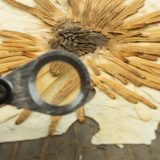
Figure 1: Russula californiensis
Next: Resources and Bibliography
Previous: Gertrude Simmons Burlingham (1872-1952)
|
|
|
|
 |