The New York Botanical Garden International Plant Science Center
Science Home ... Virtual Herbarium ... Fungal and Plant Diversity of Central French Guiana
For More Information

Note: The Virtual Herbarium may not be available for searching between 12 am and 2 am EST, while the database is reindexed.

History of the Virtual Herbarium

A Summary of Databasing Projects

A Guide for Use of the Virtual Herbarium

Treatment of Endangered and Threatened Plant Species

Specimen Showcases

Virtual Herbarium and Physical Specimen Loans

Representative Collectors (vascular plants)

How to Link to Our Specimen Data

Useful References

Acknowledgements

Plant Diversity of Central French Guiana


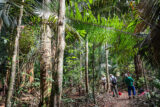
This specimen database of flowering plant collections is part of a larger project designed to document the fungal and plant diversity of central French Guiana. The ultimate goal of our project is to provide the fungal and plant inventories needed for understanding the evolution and ecological relationships of the fungi, plants, and animals that inhabit this, one of the last tropical wilderness areas of the world. We hope that the information we provide will supply the data needed to convince local authorities to protect central French Guiana in biological reserves large enough to ensure the continuance of this magnificent ecosystem.

The flowering plant database is vouchered by specimens housed mostly in the herbaria of ORSTOM-Cayenne in French Guiana (CAY) and The New York Botanical Garden (NY). This database (which does not include the ferns) serves as the basis for the Guide to the Vascular Plants of Central French Guiana.

More Information Additions and corrections to this database should be reported to the project director: Dr. Scott A. Mori, Director, Institute of Systematic Botany, The New York Botanical Garden, Bronx, New York 10458-5126 (smori@nybg.org).

Made possible by the generous funding of the Bristol-Myers Squibb Foundation and the Beneficia Foundation

To search the database by the name of the plant (family, genus, species, or subspecific epithet), author, collector, collector number, barcode number, or type status, use the Basic Search box below. To search one or more specific fields in the database, choose the Detailed Search.

Detailed Search
Scientific Name

Family

Scientific Name*

Genus

Species
Scientific Name (all determinations)

Family

Scientific Name*

Genus

Species
Collector/Number

Collector

Collection Number
Collection Location

Country

Province/State

County/Municip.

City

Specific Locality
Other

Barcode ID

Determiner/Identifier of Specimen

Type Status

Substrate
Display only records with images/other multimedia files:

Search Tips

Searches in the Virtual Herbarium are by default word-based. The fastest searches are made by using whole words as the criteria. Wildcard characters can be used to find partial words, but search times will be significantly longer.

Use an asterisk (*) as a substitute for any number of characters in a word. (Example: "Ma*" in the Province/State field will return specimen records from "Maripasoula" and "Matoury.")

Use an exclamation mark before a word to specifically exclude that word from the search. (Example: "Lecythis" in the Genus field and "!persistens" in the Species field will return all records of Lecythis except Lecythis persistens.)

Use quotation marks to search for exact phrases. Words not enclosed by quotation marks will be used to return records with all of the words, but not necessarily in the order typed.

*The Scientific Name field searches the genus, species, infraspecies, and author abbreviations of a name.
Example 1: the search term "guianensis" finds specimens of Couratari guianensis, Amaioua guianensis, etc.
Example 2: the term "Aubl." finds specimen records of numerous taxa described by Jean Baptiste Aublet.

Author abbreviations can be found using Harvard University Herbaria's Index of Botanists.

Copyright © 1996-2004, The New York Botanical Garden


  Back to Top


NYBG Home  |  Science Home  |  About Us  |  Site Map  |  Participate  |  Contact Us
© 2003 The New York Botanical Garden  |  Photo Credits
Terms of Use  |  We welcome your feedback and suggestions.