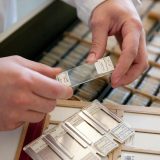
The Steere Herbarium of The New York Botanical Garden holds approximately 500,000 vascular plant specimens that were collected in Brazil, of which about 10,500 are types. Not all have been catalogued. Currently available are records for all specimens from the eastern states
, some from the central and northeastern states, many from Acre, and all types.
The Herbarium includes the first set of Brazilian collections made by NYBG scientists and their collaborators, in particular, those made by G. T. Prance primarily in the Amazon Basin, H. S. Irwin and collaborators in the Planalto (the upland interior of Brazil), and B. Maguire and collaborators in northern and eastern Brazil. It includes duplicates of the 48,900 vascular plant collections made by the 110 collectors from the U.S.A. and Brazil on expeditions during the Projeto Flora Amazonica, a binational collaboration under the direction of G. T. Prance and funded by NSF (1977-1988) and the Brazilian government. A large set of Amazonian collections made by B. A. Krukoff in 1930-1940 are housed at the NYBG Herbarium. Current NYBG scientists' contributions to the the Brazilian collection include specimens from Acre collected by D. Daly and his collaborators at the University of Acre, specimens from eastern and Amazonian Brazil collected by Scott Mori, and specimens from the Atlantic coastal forest collected by W. Thomas and his collaborators at the Cacao Research Center in Bahia.
Specimen records can be obtained by selecting from the checklist of families or by searching the database directly. Making a selection from the family checklist will return a list of genera and species in that family. Selecting a genus or species name will return a list of specimen records, for each of which additional information can be obtained by clicking the box to the right of the listed record. Searching the database directly will return a similar list of specimen records.
The Catalogue is updated regularly with records of new specimens accessioned at the NYBG Herbarium and with any changes to records already in the Catalogue.
Our goal is to make this catalogue as useful as possible. If you have any
suggestions or if you find errors in this catalogue, please take a moment to
send your comments to the